| Welcome, Guest |
You have to register before you can post on our site.
|
| Online Users |
There are currently 16 online users.
» 0 Member(s) | 14 Guest(s)
Applebot, Google
|
| Latest Threads |
Get a real government iss...
Forum: 2021
Last Post: jeannevol
Yesterday, 12:16 PM
» Replies: 0
» Views: 10
|
Get a real government iss...
Forum: 2022
Last Post: jeannevol
Yesterday, 12:15 PM
» Replies: 0
» Views: 14
|
Get a real government iss...
Forum: 2023
Last Post: jeannevol
Yesterday, 12:13 PM
» Replies: 0
» Views: 11
|
Get a real government iss...
Forum: 2025
Last Post: jeannevol
Yesterday, 12:08 PM
» Replies: 0
» Views: 11
|
Get a real government iss...
Forum: 2026
Last Post: jeannevol
Yesterday, 11:47 AM
» Replies: 0
» Views: 11
|
Get a real government iss...
Forum: 2020
Last Post: jeannevol
Yesterday, 11:43 AM
» Replies: 0
» Views: 9
|
Get a real government iss...
Forum: 2011
Last Post: jeannevol
Yesterday, 11:41 AM
» Replies: 0
» Views: 10
|
Get a real government iss...
Forum: 2012
Last Post: jeannevol
Yesterday, 11:40 AM
» Replies: 0
» Views: 11
|
Get a real government iss...
Forum: 2013
Last Post: jeannevol
Yesterday, 11:38 AM
» Replies: 0
» Views: 10
|
Get a real government iss...
Forum: 2014
Last Post: jeannevol
Yesterday, 11:37 AM
» Replies: 0
» Views: 9
|
|
|
| Billboard just made ‘free’ streams worth more on its US charts. YouTube is still not |
|
Posted by: MIPR - 12-20-2025, 06:57 AM - Forum: 2025
- No Replies
|
 |
Billboard just made ‘free’ streams worth more on its US charts. YouTube is still not happy – and is pulling its data.
December 17, 2025By Mandy Dalugdug
YouTube says it will soon stop providing data to Billboard for inclusion in the US charts, ending a partnership that has lasted more than a decade.
The decision, announced today (December 17) by Lyor Cohen, YouTube’s Global Head of Music, comes just one day after Billboard revealed changes to its chart methodology that will actually narrow the weighting gap between paid and ad-supported streams.
Under Billboard’s current formula for the Billboard 200, one album ‘unit’ equals 1,250 paid/subscription streams or 3,750 ad-supported streams — a 1:3 ratio.
Billboard’s new methodology, announced yesterday (December 16), tightens that ratio to 1:2.5, with one album unit now equalling 1,000 paid streams or 2,500 ad-supported streams. (The same ratio change is being applied to the Hot 100.)
In other words: paid streams will still be weighted more favorably than ad-supported plays, but by a smaller margin than before.
Yet in a statement today, Lyor Cohen said the changes do not go far enough. YouTube wants all streams to be counted equally on Billboard’s charts – regardless of whether they come from paid subscriptions or ad-supported services.
“Billboard uses an outdated formula that weights subscription-supported streams higher than ad-supported,” Cohen said in a statement.
“This doesn’t reflect how fans engage with music today and ignores the massive engagement from fans who don’t have a subscription.”
Cohen added: “We believe every fan matters and every play should count equally, therefore after January 16, YouTube data will no longer be delivered or factored into the US Billboard charts.”
That January 16 date is deliberate: the new Billboard streaming methodology takes effect with charts dated January 17, 2026 (covering data from January 2-8).
The question of how to weight different types of streams has been contested since Billboard first introduced tiered streaming values in 2018.
Prior to that change, all streams — whether from paid services like Apple Music or ad-supported platforms like YouTube — were counted equally.
In a 2017 interview with MBW, Apple‘s Jimmy Iovine argued that having YouTube streams count equally alongside paid-for music on Billboard’s Hot 100 disadvantaged artists.
Iovine was unequivocal about his view that paid streams should carry more weight on industry charts. “I’ll put it this way: people who pay for subscriptions should be advantaged,” he said. “The labels owe it to their customers.”
He added: “The most important thing for labels is to make the paid services compelling and entertaining. And don’t make free services as good as the paid services. Is that not obvious?!“
When the 2018 changes were implemented, paid subscription streams were weighted more heavily than ad-supported streams on both charts.
On the Hot 100, paid streams were given full point value, ad-supported streams two-thirds, and programmed streams half. On the Billboard 200, it took three times as many ad-supported streams (3,750) as paid streams (1,250) to equal one album unit.
Recent data shows that the US recorded music industry’s overall streaming revenue performance in 2024 was dragged down by payouts from on-demand, ad-supported music services, including YouTube and Spotify‘s ‘freemium’ tier.
Combined, these platforms saw their revenue contribution to the recorded music industry decline in the US last year, down 1.8% YoY to $1.83 billion.
Meanwhile, on-demand paid subscription platforms contributed $11.685 billion to recorded music rightsholders, up 4.6% YoY.
The disparity in revenue per stream between paid and free tiers is at the heart of the debate.
As Iovine put it in 2017: “The fact is that ‘free’ in music streaming is so technically good and ubiquitous that it’s stunting the growth of paid streaming. Two things have to happen: free has to become more difficult or restricted, and the paid services have to get better.”
Cohen’s announcement represents a reversal from 2019, when he welcomed YouTube’s inclusion in the Billboard 200, calling it a “very important moment in making the chart a more accurate representation of what people are listening to.”
At that time, Cohen said: “Genres like Latin, hip-hop and electronic, which consistently dominate the YouTube charts, will now be properly recognized for their popularity. This is another great step in bringing YouTube and the industry together.”
YouTube reported in October that it paid more than $8 billion to the music industry during the 12 months from July 2024 to June 2025, covering revenue from both advertising and subscriptions on the Google-owned platform.
In his statement today (December 17), Cohen directed fans to YouTube’s own charts as an alternative to Billboard’s lists.
“If you’re curious about what music is making waves on YouTube, you can visit our charts,” he said.
https://www.musicbusinessworldwide.com/b...-its-data/
|

|
|
| YouTube to pull music data from Billboard’s charts because it doesn’t like its rankin |
|
Posted by: MIPR - 12-20-2025, 03:41 AM - Forum: 2025
- No Replies
|
|
YouTube to pull music data from Billboard’s charts because it doesn’t like its ranking formula
Sarah Perez 12:57 PM PST · December 17, 2025
YouTube is pulling its data from Billboard for use in the publisher’s industry-leading U.S. music charts. The decision is in response to a recent change Billboard made to its ranking formula, which continues to add more weight to paid, on-demand streaming compared with ad-supported, free streaming.
Billboard justified its decision to adjust its age-old formula by saying that the change will “better reflect an increase in streaming revenue and changing consumer behaviors.”
In other words, streaming now matters more than buying albums or songs, so it wants its charts to reflect that.
However, YouTube doesn’t like the new formula because it doesn’t want there to be much — if any — differentiation between free and paid streams, especially if the changes are meant to reflect how consumers today are enjoying music.
“Billboard uses an outdated formula that weights subscription-supported streams higher than ad-supported. This doesn’t reflect how fans engage with music today and ignores the massive engagement from fans who don’t have a subscription,” a YouTube blog post published on Wednesday explains. “Streaming is the primary way people experience music, making up 84% of U.S. recorded music revenue.”
“We’re simply asking that every stream is counted fairly and equally, whether it is subscription-based or ad-supported—because every fan matters and every play should count,” the post notes.
The ranking changes will be reflected starting with the charts published on January 17, which will include data from January 2-8, 2026. This will impact the Billboard 200 lists and genre-based album charts. In addition, the ratio between paid/subscription and ad-supported on-demand streaming tiers will be adjusted to 2.5:1 for the Billboard Hot 100, Billboard said.
To protest the new formula, YouTube said it will no longer provide data to Billboard after January 16, 2026.
Here’s what that change means in practice: Under the revised calculation, Billboard said it will take 33.3% fewer ad-supported on-demand streams of songs from an album, and 20% fewer paid/subscription on-demand streams of songs from an album, to equal an album unit. In short, it will take fewer streams than before for an album to climb the charts. This is a win for streaming in general but not necessarily for YouTube.
Here’s why. At present, the formula Billboard uses defines an album unit (the standard measurement for chart rankings) as one album sale. It counts 10 individual songs from an album as one album consumption unit, as well.
On the streaming side, it currently says an album unit equals 3,750 ad-supported streams — like YouTube’s — or 1,250 paid/subscription official audio and video streams.
After the changes, those figures will be adjusted, so it will take 2,500 ad-supported streams or 1,000 paid/subscription streams to count as one album unit. This means paid streams count 2.5x as much as ad-supported streams. While that’s less of a gap than the current 3:1 ratio, it’s still not what YouTube would prefer seeing here. The company is essentially doing what companies do in failed negotiations like this: it’s taking its ball and going home.
Of course, by not cooperating with Billboard, YouTube’s music data won’t be considered in chart rankings, which could lead labels and artists to deprioritize publishing their music on YouTube. That’s not a good long-term strategy for YouTube as an important player in the streaming music era. That’s why this move should be viewed as the negotiation tactic it is.
“We are committed to achieving equitable representation across the charts and hopefully can work with Billboard to return to theirs,” YouTube’s announcement concludes.
SOURCE: https://techcrunch.com/2025/12/17/youtub...g-formula/
|
|
|
|
| Stephen Bishop Jams With Yacht Rock Royalty On Final LP 'THIMK' sports guest turns fr |
|
Posted by: MIPR - 12-14-2025, 11:10 PM - Forum: 2025
- No Replies
|
|
Stephen Bishop Jams With Yacht Rock Royalty On Final LP
'THIMK' sports guest turns from Michael McDonald, Christopher Cross and Kenny Loggins, plus Sting and Eric Clapton
Written by SPIN Staff |
June 27, 2025 - 10:01 am
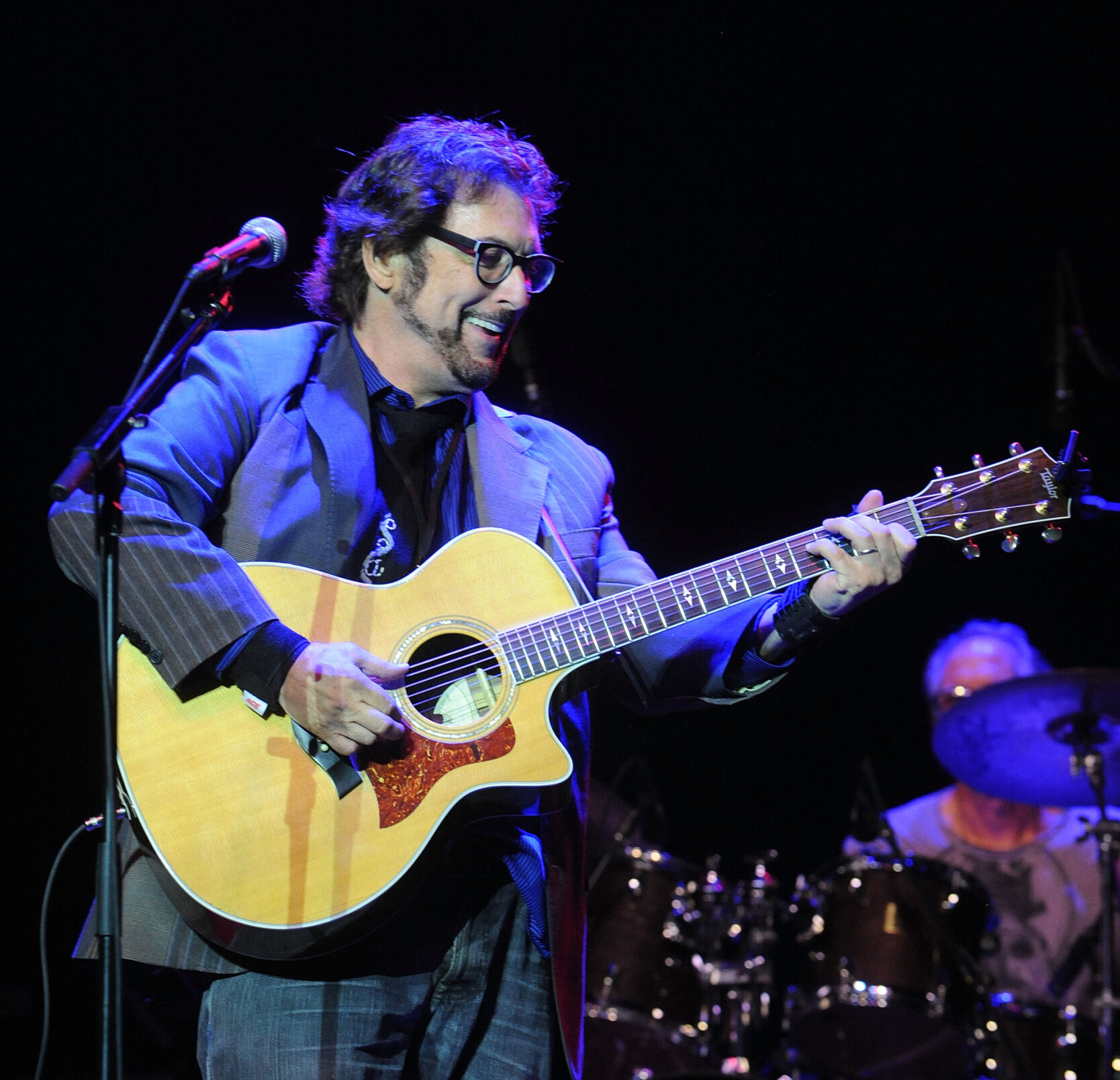
Stephen Bishop performing in 2015 (photo: Bobby Bank / WireImage).
Apropos for what he says will be his final album, singer/songwriter and yacht rock staple Stephen Bishop has rounded up Eric Clapton, Sting, Graham Nash, Jimmy Webb, Art Garfunkel, Dave Grusin, Michael McDonald, Kenny Loggins, Christopher Cross and the members of America for THIMK, which will be released Aug. 15.
Clapton and Sting lend a hand on first single “Now That I’ve Hit the Big Time,” which is out now. Among the other contributors to THIMK are former Ambrosia frontman David Pack, David Benoit, bassist Nathan East, keyboardist Greg Phillinganes, bassist Leland Sklar, drummers Steve Gadd and Nic Collins and Toto keyboardist Steve Porcaro.
“After five decades of recording music and performing, I figured it was time to close this chapter of my music career,” says the 73-year-old Bishop, who is best known for soft rock hits such as “On and On” “Separate Lives,” “Save It for a Rainy Day,” the 1982 Tootsie theme “It Might Be You” and cameos in such films as Animal House and The Blues Brothers. “THIMK — my 20th and final album — is a celebration of friendship, legacy and all the people who’ve been part of this long, wonderful ride. I’ve developed a bit of arthritis in my hands over the past few years, so I wanted to give this last album everything I had while I still could. I’m proud of it — and grateful for the chance to spend my life doing what I love.”
CD and vinyl editions will feature the bonus tracks “Dance Off the Moon” and “You Can Laugh at Me,” plus in-studio clips from the THIMK sessions and rare footage from throughout Bishop’s career.
As for the unusual album title, Bishop reveals, “THIMK, pronounced just like ‘think,’ but with an ‘M.’ Flashback to the 1980s. While out shopping, I stumbled upon a pin with the peculiar word THIMK on it. Given my penchant for collecting eccentric pins, I adorned many in those days, but this one left a lasting impression. Over the years, I considered using THIMK as a title for an album many times but ultimately decided it was too unusual. Years later, my wife found the THIMK pin. She thought it was funny and quirky, just like me, and believed it would prompt people to think about THIMK. Now, after all these years, it finally found its perfect moment. Interestingly, we recently discovered that the word THIMK also appeared in the film Taxi Driver.”
|
|
|
|
| ‘That’s called robbery’: Gene Simmons urges US Congress to end loophole that allows r |
|
Posted by: MIPR - 12-14-2025, 11:07 PM - Forum: 2025
- No Replies
|
|
‘That’s called robbery’: Gene Simmons urges US Congress to end loophole that allows radio stations not to pay for using recordings
December 10, 2025 by Daniel Tencer
KISS frontman Gene Simmons has urged the US Congress to pass a bill that would require US broadcast radio stations to pay royalties for the use of recordings for the first time.
“American artists have never been paid for radio airplay. Not one cent,” Simmons said in prepared remarks in front of the Senate Judiciary Committee’s subcommittee on intellectual property on Tuesday (December 9).
“Let me say that again: Frank Sinatra, Elvis Presley, Whitney Houston, Garth Brooks, George Strait – none of them ever got a royalty check when their songs played on the radio. Meanwhile, radio made $14 billion this year.”
The US has long followed a practice under which broadcast radio stations pay music publishers and songwriters for the use of a composition, but they don’t pay artists and producers for the use of a recording. That sets the US apart from most developed countries, where terrestrial radio stations pay for both compositions and recordings.
It also stands in stark contrast to other music media, such as streaming services and satellite radio, which do pay for recordings in the US.
“They play our songs. People tune in to hear our songs. Advertisers pay big money to reach those listeners. And the artists who created the music that makes it all work? They get bupkis. I don’t know about you, but where I come from, that’s called robbery,” Simmons said.
Quote:“American artists have never been paid for radio airplay. Not one cent.”
--Gene Simmons
Simmons appeared in front of the committee in support of the American Music Fairness Act, a proposed law that had stalled in previous congressional sessions and was reintroduced in Congress this past January by Sen. Marsha Blackburn, a Tennessee Republican, and Rep. Darrell Issa, a California Republican.
The bill would establish a performance right for recordings played on terrestrial radio, mandating that artists, performers, producers and others involved in the creation of a recording be paid a fair market rate for radio airplay.
At times Simmons strayed from his prepared remarks, declaring that “if you are against this bill, you are un-American,” and adding, per Rolling Stone: “Our emissaries to the world are Elvis and Frank Sinatra. And when they find out we’re not treating our stars right — in other words, worse than slaves; slaves get food and water. Elvis and Sinatra and Bing Crosby got nothing for their performance. You’ve got to change this now.”
Simmons, who just this past Sunday received Kennedy Center Honors in Washington, DC, along with his KISS bandmates. appeared in the Senate alongside Michael Huppe, President and CEO of digital performance royalty collection org SoundExchange, who urged Congress “to finally close this glaring loophole in our copyright law which has been giving one of the oldest music delivery platforms a free ride for far too long.”
Quote:“We are in the company of the most notorious abusers of property rights in the world – joining North Korea, Iran, and Cuba.”
--Michael Huppe, SoundExchange
Huppe noted that the current practice puts the US in bad company.
“Even Russia and China pay,” he said. “We are in the company of the most notorious abusers of property rights in the world – joining North Korea, Iran, and Cuba.”
The Recording Academy, which has thrown its weight behind the bill, notes that “when American music is played overseas, other countries collect royalties for American artists – approximately $200 million annually – but never pay those royalties because the US does not reciprocate with our own performance right.”
The bill is currently under consideration by the Senate Judiciary Committee and has yet to come to a vote. Simmons told the subcommittee that he’s “confident” President Donald Trump will sign it into law if it passes through the Senate and House.
https://www.musicbusinessworldwide.com/t...ecordings/
|
|
|
|
| “Shake It to the Max” Fallout Deepens: Ex–Grammy Official Says He Was Fired for Enfor |
|
Posted by: MIPR - 11-30-2025, 01:44 AM - Forum: 2025
- No Replies
|
|
“Shake It to the Max” Fallout Deepens: Ex–Grammy Official Says He Was Fired for Enforcing Academy Rules
by Donovan Watkis

In a detailed and personal statement, former Recording Academy genre manager Sean Thwaites is breaking his silence following his abrupt termination on November 21st—just two days after Billboard published a story about a Grammy eligibility ruling he helped oversee.
“Hi, my name is Sean Thwaites. Until recently, I served as a genre manager in the Recording Academy’s Awards Department, overseeing five categories, Global Music Performance, Best African Music Performance, Contemporary Instrumental, New Age Ambient and Chant, and Global Music Album.”
Billboard published story in November stating that The Grammys and gamma. CEO Larry Jackson were at odds after the Recording Academy ruled Moliy’s global hit “Shake It to the Max (Fly)” remix ineligible for consideration in the Global and African music categories. The Academy says the issue is straightforward: “Remixes are just not eligible” for the Global Music Performance category, a rule that immediately disqualified the submission. In a statement, the Academy acknowledged the song’s impact but reiterated its stance: “Unfortunately… it was submitted as a remix, and as per our longstanding and published rules, remixes are just not eligible in these categories.”
Jackson strongly rejected the decision, calling it a technicality that undermines the artists’ achievements. “To be disqualified because we decided to call it a remix instead of ‘Part Two’ is an interesting choice,” he said, adding that “The answer of ‘That’s just the rule’ doesn’t feel respectful toward what these artists achieved.” He argued the recording is effectively a new version — with fresh verses, a revised intro, and its own ISRC — and noted that it was the only version submitted. For Jackson, the ruling is “devoid of any common sense” and emblematic of how independent and global artists are constrained by rigid systems.
That seems to be at the heart of Thwaites dismissal which he said came without warning, despite a strong performance record and recent recognition of his work.
“On November 21st, I was terminated just 48 hours after Billboard published a story about an eligibility ruling involving the song Shake It to the Max. My committee followed Grammy rules exactly as written, and the vice president of awards confirmed in writing that my decision was correct. The Recording Academy also told Billboard, we understand the impact of the song, but it was submitted as a remix and does not meet eligibility requirements. That is the exact rule I enforced.”
According to Thwaites, nothing in his recent evaluations suggested that his position was in jeopardy.
“On August 8th, I received a positive performance review and a pay increase with no warnings, no concerns, and no indication that my job was at risk.”
He also notes that the industry continued to rely on him as a representative of the Academy up until the days before his termination.
“And on November 17th, just days before I was terminated, RCA Records requested me by name to interview Davido at the Grammy Museum. At that time, I was managing 43 nominees across all five categories.”
gamma. appealed for nearly a week, but the Academy held firm. Jackson, a music executive who ranked in Billboard’s top 100 power players, questioned what message this sends to rising artists from Africa and the Caribbean, saying, “How discouraging is it… that such an undeniable global success may not be honored because of rigid conventionalism?” Ironically, the remix also couldn’t qualify for Best Remixed Recording, since simply adding featured vocalists doesn’t meet that category’s criteria.
Despite heavy chart success — including 26 weeks at No. 1 on U.S. Afrobeats Songs and a 20-week run on the Hot 100 — the track will be absent from the 2026 Grammys. As Jackson summarized, the dispute highlights “the lack of leverage that independent artists and independent music companies systematically have against the machine.”
Thwaites, who has been widely recognized for his advocacy for global and African artists, emphasized that he would never intentionally sideline African music.
“And I want to be clear, I would never snub African music. I am the person who wrote the proposal that created the best African music performance category. I’ve spent years uplifting African artists and building the Academy’s bridge to the continent. African music is part of my purpose and identity.”
Concerns About Departmental Patterns
In his statement, Thwaites also raises concerns about the broader pattern of Black employees being dismissed from the Awards Department.
“When I started at the Recording Academy, there were six black employees in the awards department. One black colleague was terminated in August, just three months before me, making me the fourth black employee terminated during my time there. That pattern is deeply concerning.”
Thwaites says he is speaking publicly now because of the broader implications of his experience.
“I’m speaking today because transparency matters, fairness matters, and no one should lose their job for following the rules. I’m seeking the proper legal support and I’m standing firmly in my truth. Thank you for listening.”
|
|
|
|
| Megan Thee Stallion Gives ’90s Glamour & Plenty of Twerking in Cinematic ‘Lover Girl’ |
|
Posted by: MIPR - 10-27-2025, 02:29 AM - Forum: 2025
- No Replies
|
|
Megan Thee Stallion Gives ’90s Glamour & Plenty of Twerking in Cinematic ‘Lover Girl’ Video: Watch
The only thing missing is a Klay Thompson cameo.
By Michael Saponara
Billboard 10/24/2025
Megan Thee Stallion is head over heels for Klay Thompson. The Houston Hottie gushes about her NBA boo throughout her new single, “Lover Girl,” and she delivered a stunning accompanying visual on Friday (Oct. 24).
Between the stylish ’90s glamour wardrobe, sharp visuals and storytelling, Megan spared no expense in this video.
A black-and-white clip finds Thee Stallion flanked by four women in lingerie twerking in unison and moving into refreshing choreography. The scene’s aesthetic feels like Meg was taking a page out of the Beyoncé playbook, inspired by Bey’s 2011 “Dance for You.”
The Houston Hottie turns the neck of a martini glass into a stripper pole and she makes a lucky chair her dance prop. There’s plenty more twerking, and Meg even plays the role of Cupid in a corset and wings with a bow and arrow, searching for love.
Viewers who stayed until the very end of the video were in for a treat, as Megan left an Easter egg teasing what’s to come. Without much context, there’s an animal that appears to be a wolf growling in the darkness.
“Lover Girl” serves as Megan’s second single of 2025, following April’s “Whenever,” as she looks to be entering a new chapter of life with Thompson happily by her side. She pulled up to support her NBA boyfriend’s first game of the season earlier this week in Dallas.
Watch the “Lover Girl” video
Read the original article here.

|
|
|
|
| Selena Gomez gets real about her and Benny Blanco’s family plans after wedding |
|
Posted by: MIPR - 10-13-2025, 01:16 AM - Forum: 2025
- No Replies
|
|
Selena Gomez gets real about her and Benny Blanco’s family plans after wedding
By Sophia Melissa Caraballo Piñeiro
From PageSix Published Oct. 10, 2025, 11:04 a.m. ET
Selena Gomez is ready for her next role — being a mom.
In celebration of her finale episode on the “Wizards of Waverly Place” sequel, “Wizards Beyond Waverly Place,” she took to Instagram Story Thursday night with a sweet message.
“Alex Russo is a mommy,” she captioned a clip from the Season 2 finale, referring to her character.
“Hopefully one day that’ll be me.”
Gomez, 33, has been making brief cameos in the Disney+ show, which focuses on the new generation of wizards in Waverly Place, including a young Billie who is sent to live with Alex’s older brother, Justin, to be trained.
In the Season 2 finale, Billie is revealed to be Alex’s daughter — before Gomez’s character sacrifices herself by falling into a portal to save her family.
The “Kill Em with Kindness” singer’s post comes almost two weeks after she tied the knot with music producer Benny Blanco in an intimate California wedding.
Back in March, Gomez and Blanco said on the “Jay Shetty” podcast that they can’t wait to start a family together.
“I don’t know what will happen, obviously, but I love children,” Gomez told host Jay Shetty. “I love making [children] laugh; they’re just so sweet. So absolutely, when that day comes, I’m so excited for it.”
Blanco, who went public with Gomez in December 2023, doubled down on those hopes in a June interview with InStyle.
“I love kids; I love being an uncle. I want to be a dad, though, God willing,” he told the outlet, adding, “I’m just dreaming and praying every day.”
However, last year, the “Emilia Perez” actress revealed that she can’t carry her own children due to medical issues amid her battle with lupus.
Nonetheless, she confirmed to Vanity Fair in October 2024 that she would be interested in starting a family by using a surrogate or adopting.
“It made me really thankful for the other outlets for people who are dying to be moms. I’m one of those people,” she said at the time. “I’m excited for what that journey will look like, but it’ll look a little different.”


|
|
|
|
| 'The Information' Finds Beck at His Best |
|
Posted by: MIPR - 10-13-2025, 01:10 AM - Forum: 2006
- No Replies
|
|
'The Information' Finds Beck at His Best
October 9, 200612:00 AM ET
Heard on Day to Day
By Christian Hoard
Beck is something of a musical chameleon — he's been called a cracked folkie, a hip-hop joker, a sonic innovator, even a pop star. His latest CD, The Information, finds him in all these guises, and more.
The 15-song collection is his most difficult descent into narcotic funk and psychedelic rock. And it may well be a classic.
"Cellphone's Dead," the lead single from Beck's new album, is a wobbly electro dub-fest that sounds like it could have been transmitted from a remote desert. If it sounds like an odd choice to introduce Top 40 listeners to his tenth album. But Beck has always been able to create masterworks out of elements that could easily have fallen flat.
The Information is is Beck's weirdest album yet, full of tricky rhyme schemes, narcotic funk, sun-baked melodies, electronic blurps and strange ear candy. But it's also the psychedelic rock record of the year, and an album that could prove a favorite for years to come.
"Elevator Music" is one of the catchiest cuts on the record, but it's also slightly retrograde in its big funk sound and junkyard-rap shtick. Beck's coherent lyrics manage to make you feel relatively traditional post-modern thoughts about a modern world where mountains of data have replaced genuine human interaction.
The artist has been tackling similar issues for years. But now his lyrics are more smartly introspective than ever, and his music is more ambitious, more nuanced and ultimately more seductive than ever.
Take, for example, the Kraftwerk-meets-disco-meets-Duran Duran hookiness of "We Dance," the serrated, tape-looping, washing-machine tumble of the genius "1000 BPM," or sun-baked, uneasy affection of "Think I'm in Love."
How exactly does Beck pull it off? For one thing, he's got Nigel Godrich, who worked Beck on 1998's folkier Mutations and was the producer behind Radiohead's seminal CD OK Computer. Godrich knows how to keep disparate, experimental sounds coherent, and with his help, everything on The Information just works.
Every song has a memorable yet subtle melody, or arresting rhymes that are more schooled and skilled than any in Beck's career. More importantly, every song goes somewhere. So when Beck actually bears down and tosses out a big, show-stopping chorus on the song "Strange Apparition," it sounds like the culmination of a lots of great little moments, and one to grow on.

|
|
|
|
| Hear Beck’s Re-Recorded Rendition of ‘Where It’s At’ From New Audible Special ‘Dear L |
|
Posted by: MIPR - 10-13-2025, 01:06 AM - Forum: 2022
- No Replies
|
|
Hear Beck’s Re-Recorded Rendition of ‘Where It’s At’ From New Audible Special ‘Dear Life’
Singer reworks old classics and shares the origins of some of his best-known tracks in latest installment in Words + Music series
By Daniel Kreps
Rolling Stone June 30, 2022
Beck has shared a newly recorded rendition of his 1996 single “Where It’s At” and breaks down the origins of the Odelay classic in these exclusive clips from the singer’s upcoming episode in Audible’s Words + Music series.
For the episode dubbed “Dear Life” — named after a cut off his 2017 LP Colors — Beck revisits and re-records some of his most popular songs, including “Loser” and “Where It’s At,” to give each track a fresh perspective following his decades-long tenure as a music pioneer.
Beck previously hinted that he was re-recording some older songs — a.k.a. pulling a Taylor Swift — from his catalog during a SXSW keynote earlier this year, but didn’t specify why until now. “I think it’s a bit arbitrary that you make a record and that’s the only version that exists,” Beck said at the time. “You look back at your work and you see things you want to fix. That’s what drives the next album. You constantly try to not evolve but crystallize.”
The re-recorded rendition of “Where It’s At” doesn’t stray structurally from the Odelay original, but it does temper the song’s chaotic exuberance, offering a more mature, refined version from an artist now in his fourth decade in the music industry.
In addition to the new version, Beck also reminisced about performing that song live in 1996 while on the Neil Young-headlined H.O.R.D.E. tour. “[Young] has set up his deck chair on top of his touring bus on the side of the stage, and I remember the sun was going down, [I’m singing] ‘Where’s it at! Clap your hands!,'” Beck says. “And I looked over and he was on top of his bus on his deck chair with a beer, clapping his hands.”
Beck added of “Where It’s At,” “That song came at a time when music was a bit more… had a harder edge, it was a bit more angry, loud guitars. And this song was sort of completely the opposite, a bit anachronistic as well as being a bit of a throwback. People thought it was kinda retro, but it was kinda celebratory at a time when that wasn’t really cool in music.”
To this day, Beck noted that he performs the track at every concert. “It’s a rallying of people. Let’s lose ourselves in the music for a minute,” Beck said. “It’s not an easy thing to do, to invite people to lose themselves, and the best music does. You can’t hope for anything more as a musician.”
“Dear Life” premieres as part of Audible’s Words + Music series on Friday, July 1.

|
|
|
|
|